<----^----


Fossil Puzzle 

A Claw? An Octopus?
Guess again! The answer:

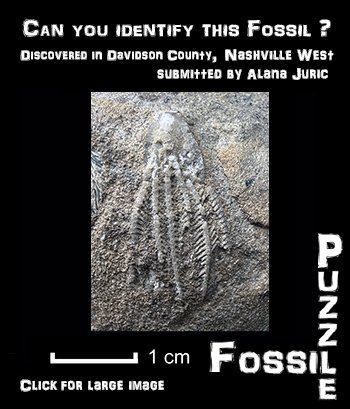
Crinoid Brachials and Pinnules

Crinoids are familiar Tennessee fossils. The stacked-coin appearance of crinoid columnules has led to the common name "Indian Money. But few Tennesseans are lucky enough to ever see what floats at the end of the stalk.

The stem was topped by a calyx that sprouted branched structures the animal used to sift sea water for food. These arms -- called brachials -- sometimes sported feathery or comb-like edges called pinnules that enabled them to catch even smaller particles. These are carried by mucus through grooves inside the brachials down to the mouth at the top of the calyx.


Crinoids can be tricky to identify. Experts study the calcite plates in the calyx, and the spacing and details in the pinnules but few complete specimens are available from the Nashville area.

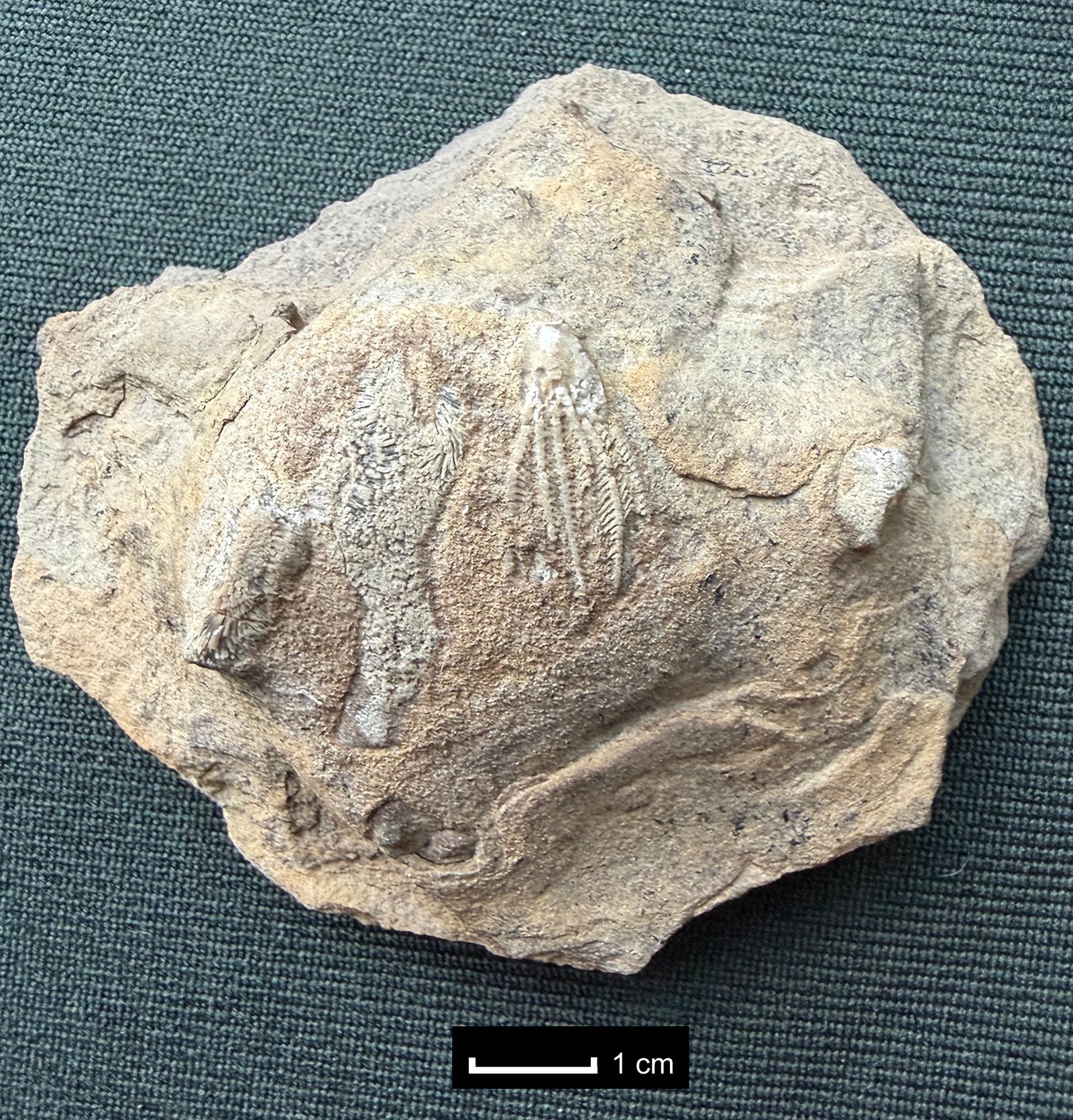
This fossil might be a juvenile specimen, or even a new species. Another sample could confirm this -- and that fossil could be sitting right now in a pile of rocks waiting for the right person to pick it up and realize what they are holding.

Thanks to Alana Juric for finding, and photographing and sharing this interesting fossil. The specimen was found near Nashville West shopping center a few feet from the parking lot.

You can learn more about crinoids here.


A full view of this specimen
---->